
Reading Time: 3 minutes
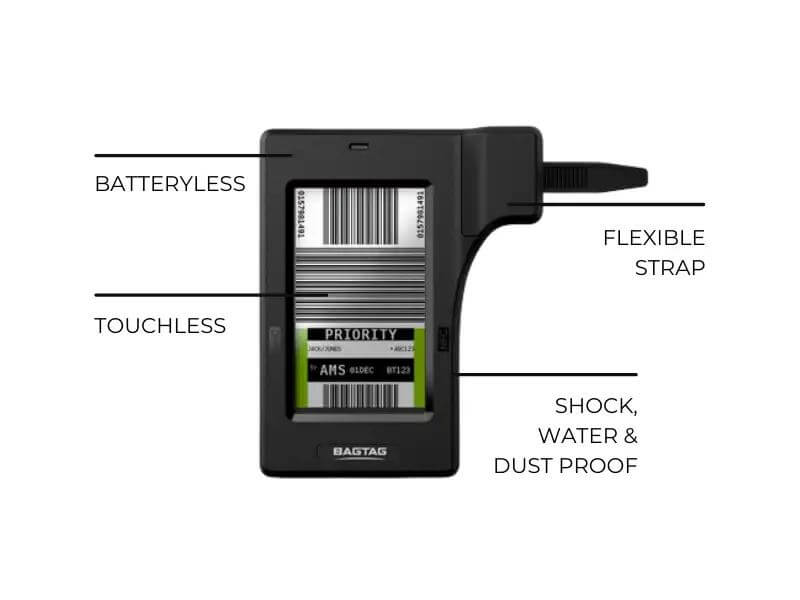
Alaska Airlines announced this week that it will be the first U.S. airline to launch an electronic bag tag program later this year. As the name suggests, now you will have an electronic bag tag rather than a printed tag on your checked luggage. Previously, Alaska Air passengers had the option to print their own bag tags at home before arriving at the airport to speed up the process of checking your bags. With this new technology, customers can “tag” their bags anywhere through Alaska Airlines’ mobile app up to 24 hours before their flight. All you have to do is check in through the app on your phone and then touch it to the bag tag to transmit the data. The e-paper bag tag’s screen will then display the flight information. The airline expects the time to drop of luggage to be reduced by 40%. Because the tag needs no batteries, it is approved to be on checked bags. Besides that, the tag is shock, water, and dust proof. Durability needs to be seen after the luggage with the tag gets tossed around by airport baggage handlers.
Once at the airport you will drop your bag at an automated station, which will weigh and measure the bag. This is when you will be prompted to pay for overweight bags, I assume. As Alaska Airlines wants to speed up the check-in process and make it as painless, fast, and efficient as possible, I still don’t understand why you can’t prepay overweight bags already during check in in the app or on your computer. You can pay for additional bags but not for overweight bags. I pitched this to so many airlines, but nobody implemented it. Alaska Airlines will speed up the process with this technology and then slow it back down artificially at the airport by having to swipe your credit card.
The electronic bag tag program will roll out later this year in phases. The first phase will begin in late 2022 when 2,500 Alaska Airlines’ frequent fliers get the chance to use the bag tag. Mileage Plan members will have the option to purchase the devices early next year. The airline hasn’t announced a price yet for the tag.
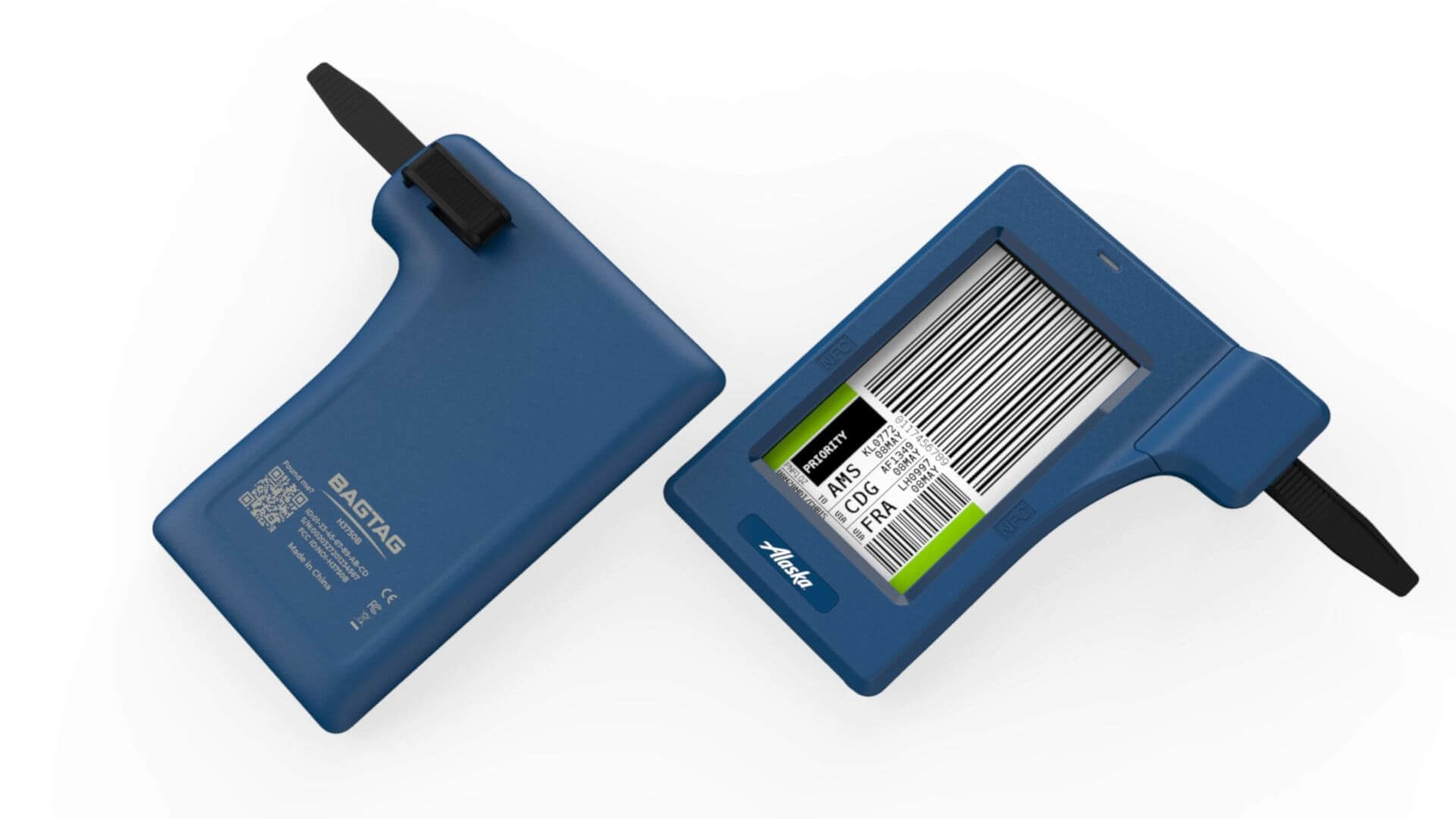
Alaska Airlines partnered with Dutch technology company BAGTAG for this program. On their website you can buy the BAGTAG Flex, which looks identical to the one Alaska Airlines is showing, for a little bit over 66 Euros. Let’s hope Alaska Air and BAGTAG didn’t enter into any proprietary partnership with the tags Alaska will be offering. If the one Alaska Air uses is the standard BAGTAG Flex, you will also be able to use it on other airlines which support electronic bag tags. Currently, these airlines support the BAGTAG Flex – Air Dolomiti, Austrian, China Southern, KLM, Lufthansa and Swiss.
Conclusion
The idea of using technology to enhance and improve the travel experience is great. Alaska Air is going in the right direction. However, as mentioned earlier, I am so disappointed that you can’t pre-pay for overweight bags. I don’t see any reason you shouldn’t be able to do so. If someone knows why, let me know please.
Right now, this technology is only good for frequent fliers. It is not worth it for a family to buy one of these electronic bag tags for every piece of their luggage when they fly on vacation once or twice a year. Printed tags at the airport are still complimentary and you can even print them yourself on a self-check-in kiosk.
I hope soon more airlines will implement these electronic bag tags. I always wondered why it isn’t here yet to reduce paper and plastic waste.

Peter has a passion for Traveling, Photography, and Geocaching. These are the best ingredients for amazing adventures all over the globe. “Traveling is fun, no matter if you stay in a luxury hotel or travel like a backpacker.” Peter shares his experiences on his Blog www.gatetoadventures.com
Some of Peter’s photos are published on corporate websites, in-flight magazines, travel guides, and much more.